

Commentary
Evan A. Feigenbaum
{
  "authors": [
    "Evan A. Feigenbaum"
  ],
  "type": "commentary",
  "blog": "Emissary",
  "centerAffiliationAll": "dc",
  "centers": [
    "Carnegie Endowment for International Peace"
  ],
  "collections": [
    "The Iran War’s Global Reach",
    "Dynamic Security Risks in Asia"
  ],
  "englishNewsletterAll": "asia",
  "nonEnglishNewsletterAll": "",
  "programAffiliation": "AP",
  "programs": [
    "Asia"
  ],
  "regions": [
    "Asia",
    "Southeast Asia",
    "South Asia",
    "East Asia"
  ],
  "topics": [
    "Foreign Policy",
    "Economy"
  ]
}
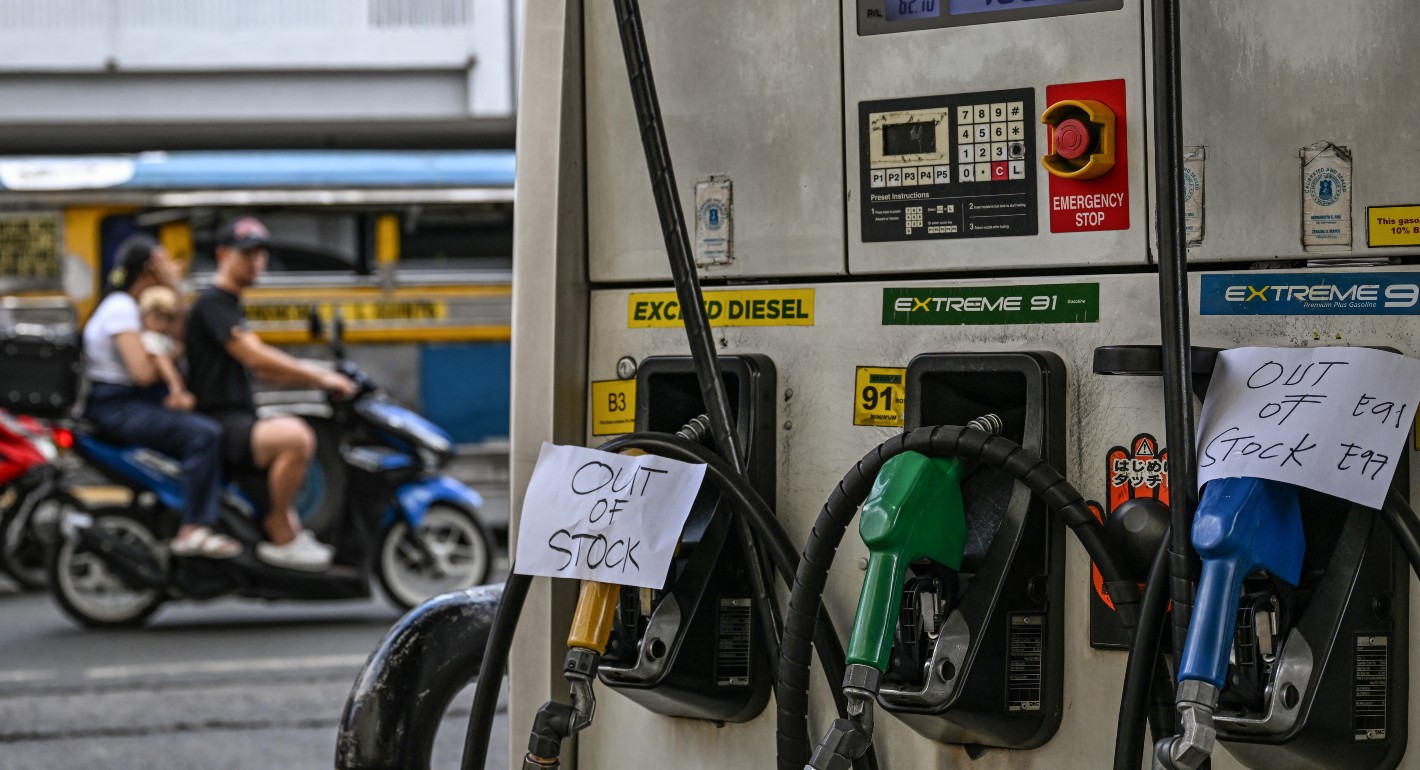
Signs reading "out of stock" are displayed at a gas station amid rising petrol prices in Manila. (Photo by Jam STA ROSA / AFP via Getty Images)
The United States ignores the region’s lived experience—and the tough political and social trade-offs the war has produced—at its peril.
As the United States wages war with Iran, much of Washington has been consumed with a geopolitical debate about what it will mean for America’s strategic competition with China. But this abstract debate belies the harsh realities now facing governments, firms, and people across Asia—the very region that Washington’s strategic class views as the cockpit of competition with Beijing.
The war threatens budgets, welfare programs, and ordinary livelihoods in Asia, a deeper and potentially existential set of challenges that seem sure to influence perceptions of whether and how American goals and interests intersect in the real world with the region’s priorities and its people’s daily realities.
Five weeks into the war, Asia has faced a grim picture: fuel price caps and three airlines in emergency management in South Korea, school closures in Bangladesh and Pakistan, jet fuel rationing and a push to work from home in Vietnam, a public sector work from home directive in Malaysia, alternate-day driving schedules for private vehicles in Myanmar, and water pumps stalling out in rural Thailand, all because of fuel prices or shortages induced by the conflict in the Middle East. Already, the region faces politically fraught policy trade-offs and difficult fiscal constraints—choices that will become ever starker the longer the war persists.
These challenges belie Washington’s focus on the geopolitics of the war, putting America’s posture in Asia at risk by strengthening the perception that the United States has lost the plot on what matters most to the region.
One especially instructive case is Indonesia, where President Prabowo Subianto has had much riding politically on the fuel subsidy, a controversial free nutritious meals program, and other welfare initiatives. Already, Indonesia’s finance ministry is exploring cuts to the meals program, with the finance minister mulling $2 billion in savings by cutting one day from the weekly distribution schedule.
It is not hard to imagine a world of harsh budget constraints where leaders like Prabowo may now have to either curtail signature programs and risk welfare gains, or else blow through fiscal constraints and run fresh budget deficits. And in Indonesia’s case, for example, there is actually a statutory requirement preventing this by ostensibly holding the deficit to 3 percent of GDP. This limit has been breached just once—during the coronavirus pandemic—and is closely watched by the market participants that Prabowo’s government, like its predecessors, has sought to reassure.
Meanwhile in Washington, where I work, there seems to be a debate conducted in a parallel universe—focused mostly on supposedly back-footing China by picking off its strategic partners like Iran. This debate is already quite ideological, with the war mostly just reinforcing people’s priors—either Beijing needed Iran and Venezuela and so is on the back foot from Washington’s ingenious four-dimensional chess, or else the United States has overreached and Beijing is going to swoop in and claim superpower status as some sort of ocean of stability and predictability.
Frankly, this very American debate seems at once self-satisfied, out to lunch, and highly abstract given the actual trade-offs that are likely to preoccupy Asian policymakers, firms, and people in the days ahead—like, say, whether to blow through a free nutritious meals program and a fuel subsidy (with all the political risks this will entail) or else blow through the budget and fiscal caps (with the various market risks this may entail).
Asia faces a double whammy of pain from the United States: First, there has been a year of erratic American trade policies and fresh tariffs, which have undermined not only many of the region’s prevailing developmental assumptions but also the competitiveness of its key economies, including America’s closest regional partners. Second is American policy in the Middle East, which now threatens to wreck Asian energy security while forcing politically fraught, socially unpalatable, and deeply unpopular fiscal and programmatic choices. So whose debate are we having here in DC? At the end of the day, it is pure fantasy to believe these will have zero effect on U.S. posture in Asia.
More than a decade ago, I wrote a monthly column for India’s financial newspaper, the Business Standard, called “DC Diary.” I’m thinking of starting a new column called “DC Delusions,” in which other people’s realities are extrapolated away while Washington projects its strategic debates about competing with China onto everyone and into everything. The fact is, there could be tough choices ahead for Asia that will, in turn, raise up more skepticism of American priorities and Washington’s commitment. And we cannot just talk about U.S. strategy, posture, and especially staying power in the region as if these choices won’t affect perceptions and outcomes, and thus endure even after the bombs stop falling.
For most stakeholders in Asia, and especially amid crisis conditions, the agendas that matter most aren’t rooted in abstract geopolitics but are firmly anchored close to home and with an eye trained squarely on the region’s future: growth, employment, upskilling, sustainability, energy security, social welfare, technological transformation, and cost of living.
To the extent the United States enables these goals, it will compete with China strategically while also growing its role in the region. But when it is aloof, preoccupied elsewhere, or above all perceived as putting these core priorities in jeopardy, it will find itself in the crosshairs of those whose concerns lie, above all, in assuring life chances across generations to anchor Asia’s remarkable rise.
Indeed, that is one reason the preponderant Asian response to President Donald Trump telling the region’s major energy consumers that Hormuz is now their problem has not been to join the United States. Instead, it has been to accommodate Iran and attempt to reach separate deals on passage through the strait. In the past week alone, Malaysia, the Philippines, and Vietnam have all done so. More will surely follow.
During the George W. Bush administration, I worked for secretary of state Colin Powell, who famously told the president in the run-up to the invasion of Iraq, “you break it, you own it.” In many respects, and to many Asian ears, current American messaging stands Powell’s alleged aphorism on its head— “I break it, you own it.” In strategic terms, this is not a winning message for the United States in Asia.
A version of this piece was originally published on LinkedIn.

Vice President for Studies
Evan A. Feigenbaum is vice president for studies at the Carnegie Endowment for International Peace, where he oversees work at its offices in Washington, New Delhi, and Singapore on a dynamic region encompassing both East Asia and South Asia. He served twice as Deputy Assistant Secretary of State and advised two Secretaries of State and a former Treasury Secretary on Asia.
Recent Work
Evan A. Feigenbaum
Evan A. Feigenbaum
Carnegie does not take institutional positions on public policy issues; the views represented herein are those of the author(s) and do not necessarily reflect the views of Carnegie, its staff, or its trustees.
U.S. trading partners in Asia are closely watching the dispute for signs of how it may affect their own interests.

Barbara Weisel

Xi, Putin, and other regional leaders are back-slapping in Bishkek, but the SCO has yet to answer the most serious questions about continental Asia's economic future.
Evan A. Feigenbaum
Lee’s tour shows how Seoul is reorganizing its diplomacy away from Pyongyang and toward industrial networks and the geography of the compute economy.

Darcie Draudt-Véjares
“AI safety in parallel” is modest and pragmatic but vital.

Matt Sheehan
Beijing regulated AI—and then Chinese AI companies took off.
Matt Sheehan